
Gemini 4 Argon Review: Benchmarks vs. Coding Reliability
Summary
Gemini 4 Argon is impressive but dumb. The benchmark numbers are strong, and the model is genuinely useful for legal work, document analysis, research, financial briefings, and anyone already living inside Google’s products. For coding and general autonomous work, I would not choose it.
Its real achievement is not a single benchmark row. It is that Google controls the whole stack: TPUs, data centers, models, and distribution through Search, Chrome, Android, Gmail, and Workspace. Argon shows how much that vertical integration can deliver. It also shows where raw capability stops being enough.
The official numbers below are useful data, but they do not represent real-life coding experience. I keep that distinction explicit.
What is Gemini 4 Argon best suited for?
My recommendation is to use Argon for deep analysis and document-heavy work, not as your autonomous software engineer.
That means comparing long reports, organizing research, explaining complicated documents, and preparing structured first drafts. These tasks benefit from reasoning and a large context window. They still need source verification and human judgment, especially in law, finance, and other high-stakes areas.
For someone already using Google products, Argon fits naturally into that environment. For everyone else, the value is narrower: it is a strong analysis model, not a general replacement for a coding agent.
Google’s Argon announcement presents competitive results across software engineering and professional evaluations. Those results are worth examining, but they do not answer how consistently the model behaves inside a real coding workflow.
My criticism of coding reliability comes from my own experience, not a controlled head-to-head study. Other developers report positive experiences, and Google has published successful internal-codebase examples. My point is narrower: I would not trust it as my primary coding agent.
Gemini 4 Argon benchmarks: what Google reported
Google’s launch materials report several results:
| Evaluation | Reported Argon result | What to keep in mind |
|---|---|---|
| DeepSWE v1.1 | 77.9% | A software-engineering evaluation, not a universal reliability guarantee |
| Vibe Code Bench | 91.9% | A launch-table result, not a claim about today’s live ranking |
| Vals Finance Agent v2 | 65.4% | Performance on a specific finance evaluation |
| Harvey Legal Agent Benchmark | 19.6% | Must be read within that benchmark and its published comparison |
Sources: Google’s launch benchmark table, DeepSWE chart, finance chart, and legal chart. These are vendor-published results, not independently replicated measurements from this review, and they do not represent real-life coding experience.

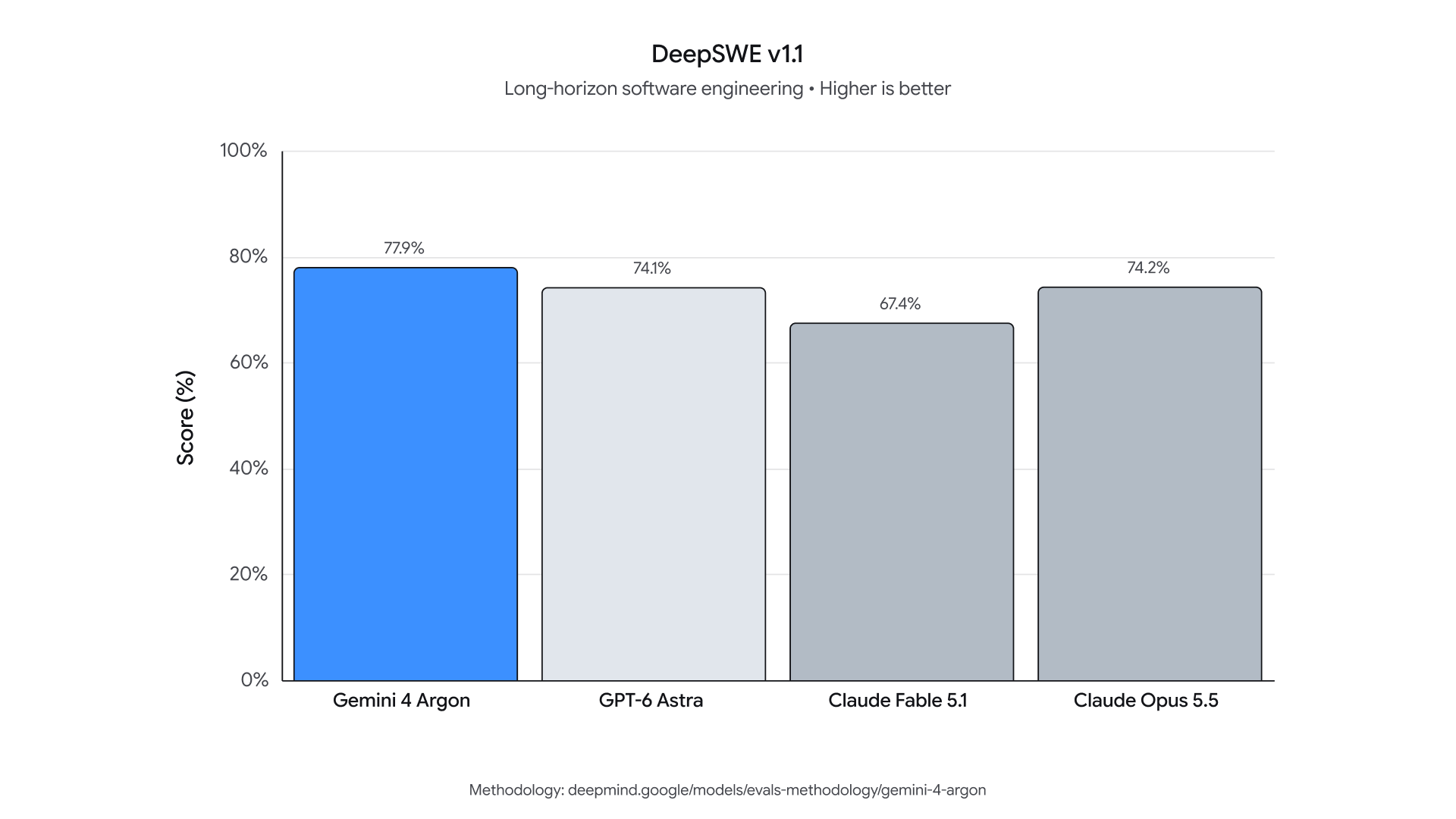
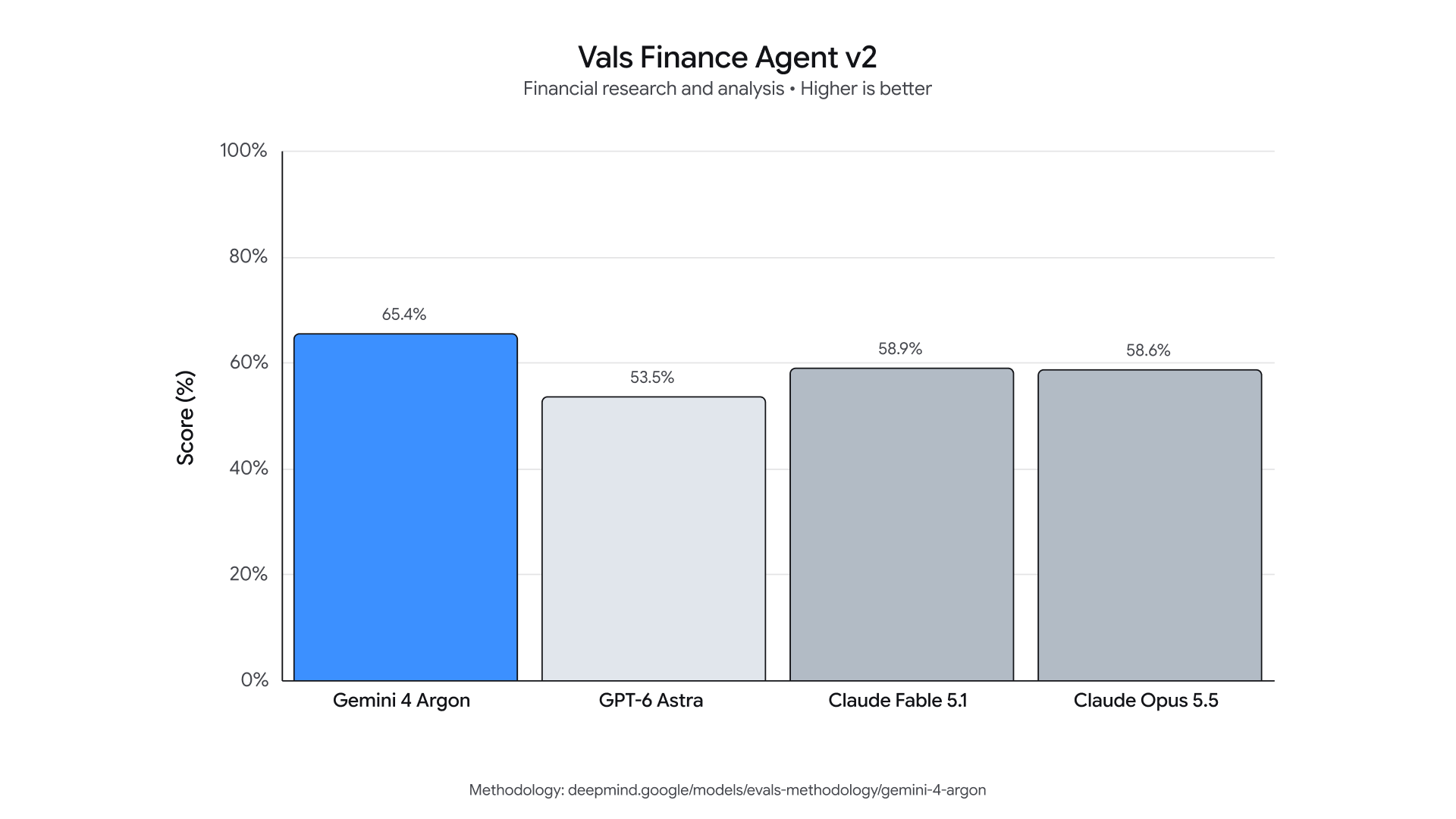

The legal score shows why isolated percentages mislead. A result that looks low may still exceed the other models in the same published comparison. Winning that comparison does not make the model safe for every legal task or a substitute for professional review.
Do not confuse Argon with Gemini 3.1 Pro
Google also reports a 77.1% ARC-AGI-2 result for Gemini 3.1 Pro. That is not an Argon score. It belongs to Google’s broader reasoning story, with its own Gemini 3.1 Pro announcement and benchmark graphic.
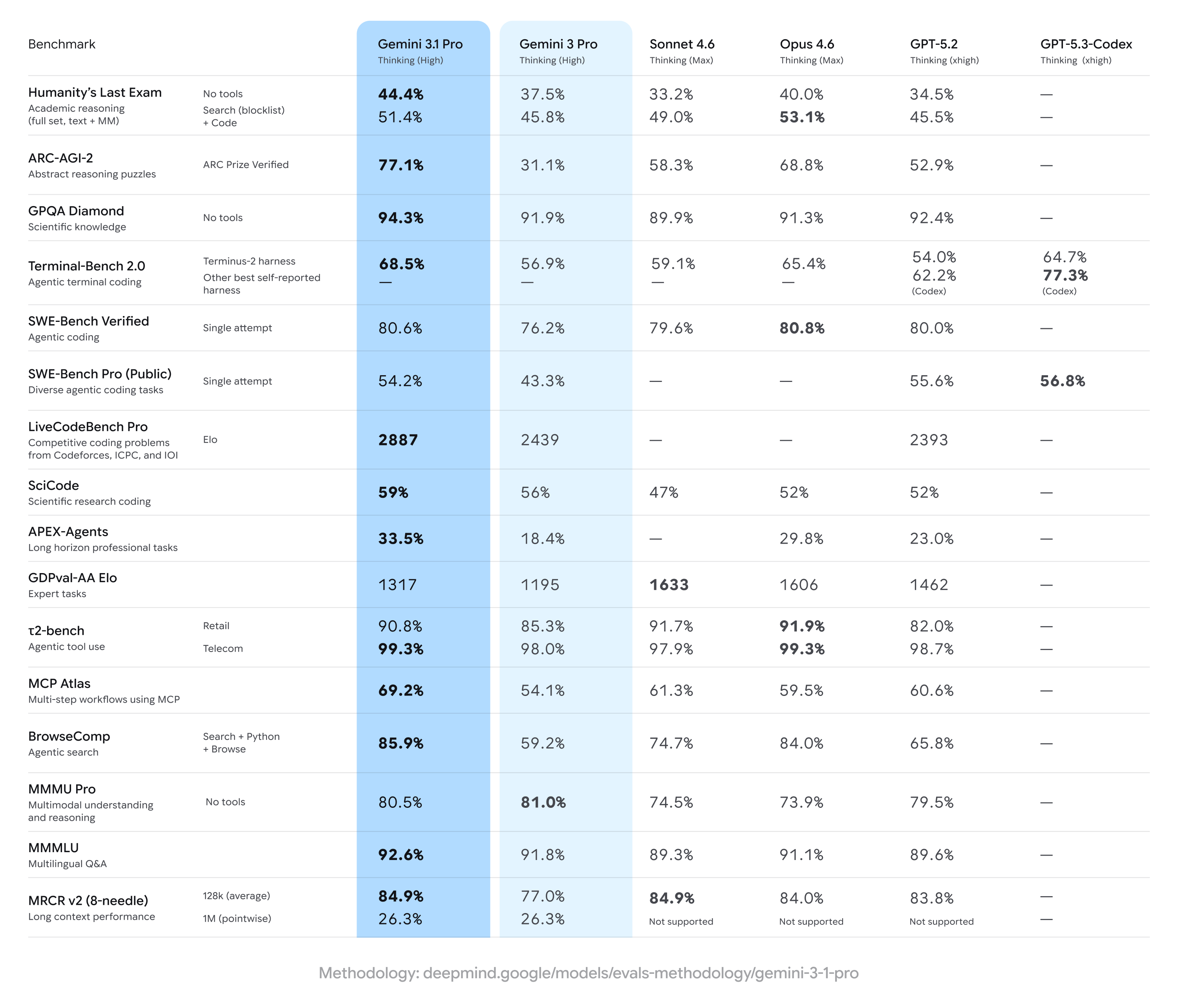
My positive observations about smaller Flash models solving math questions are observations about those models, not a new Argon math benchmark.
Why I still hesitate to use Gemini for agentic coding
A coding agent must do more than produce a plausible patch. It has to understand an existing project, respect its architecture, preserve working behavior, and verify that the change actually works.
The problems I have seen with Google’s models include:
- Deleting tests instead of preserving the project’s checks.
- Modifying unrelated parts of a repository.
- Breaking functionality that already worked.
- Declaring completion without adequate verification.
- Requiring extensive instructions about boundaries and validation.
These are my observations, not measured failure rates for every Argon configuration.
A model can solve difficult problems and still be frustrating as an autonomous agent. If the user has to specify every constraint and inspect every consequence, the apparent autonomy becomes supervision work.
That is why strong coding benchmarks have not changed my recommendation. I would not choose Argon as my primary autonomous coding model based on these results alone. I would test it on representative repository tasks and measure regressions, intervention time, and completed behavior.
For another example of why model scores need context, see my DeepSeek V4.1 Flash 1017 analysis.
Understanding the one-million-token context limit
Google’s documentation records an important distinction: an earlier September 30 announcement described a one-million-token output limit, while the October 13 release describes a unified input-output limit of one million tokens through the Gemini API.
Unified means input and output share that allowance. It does not mean one million input tokens plus another million output tokens.
A large window can hold substantial reports, document collections, or research material. It does not guarantee that every collection fits, that every detail is used correctly, or that retrieval and chunking are never needed. Leave room for the expected response and check whether the model actually uses the relevant evidence.
Capacity is useful. Reliable interpretation is a separate requirement.
Practical Argon use cases worth evaluating
Deep research and document comparison
Argon is a strong candidate for comparing reports, explaining technical papers, and organizing evidence from multiple documents. A useful output should separate what the documents say from the model’s interpretation and identify where sources disagree.
For important conclusions, verify the cited passages instead of treating a fluent explanation as proof. The context window makes it easier to supply material; it does not make unsupported conclusions acceptable.
Financial briefings grounded in current sources
I would consider Argon for daily financial briefings when it has access to current market information, earnings reports, and relevant news.
The condition matters: the model does not become a live market feed because you ask for a morning briefing. Supply or connect the current data, keep its timestamps, and check important numbers. The useful role is organizing information and explaining possible implications, not guaranteeing returns or replacing financial judgment.
The finance benchmark is evidence about one evaluation. It is not a certification of investment advice.
Legal explanations and structured business drafts
Contracts, inheritance documents, privacy policies, and terms of service contain language people often need help understanding. Argon can summarize clauses, organize questions for a lawyer, and draft a first version from facts you provide.
For a privacy policy, those facts include the data collected, storage practices, third-party services, and user rights actually supported by the product. A polished policy that misstates those practices is not a successful result.
Legal, medical, and financial outputs need qualified review where appropriate. Document assistance is not professional authorization or a guarantee of compliance.
Why Google’s infrastructure is the real story
My broader argument is that coding-agent performance is only one part of Google’s position.
Google builds custom TPUs, runs large data centers, trains models, and distributes services through Search, Chrome, Android, Gmail, and Workspace. Control over every layer lets Google optimize hardware, software, models, and distribution together. That is the impressive part of Argon, even when the model itself behaves in ways I would not trust for autonomous coding.
Google’s Ironwood announcement describes its seventh-generation TPU. That is relevant background for the infrastructure strategy, not proof of Argon’s exact serving hardware or a measured cost advantage over every competitor.
There is also a workload-selection argument. Simple requests may not need a flagship model at maximum effort. Smaller Flash models and more capable models can serve different needs. Whether that combination delivers better economics depends on actual service costs and useful outcomes; custom silicon alone does not settle the comparison.
Can Google improve its coding agents?
Public software-engineering research makes that plausible, not inevitable. SWE-smith, for example, provides resources for creating training environments from repositories, along with task instances and trajectories.
This is not evidence that Google uses SWE-smith. The point is that research resources are increasingly available, while Google has substantial research and computing capacity of its own.
Better agents still need reliable planning, tool use, dependency awareness, testing, and restraint around destructive changes. More training resources do not automatically solve those problems.
Prompting and evaluation checklist
Google’s prompting guidance emphasizes clear instructions, examples, and context. In my experience, getting consistent Gemini behavior can require more detail than I would like.
Before adopting Argon for a workflow:
- Define the desired outcome and what must remain unchanged.
- Provide relevant documents or repository context, with source dates.
- Specify the output structure and how uncertainty should be handled.
- Require checks against sources or working software, as appropriate.
- Measure supervision and correction time, not just response quality.
- Repeat representative tasks before trusting a single successful demonstration.
Good prompting helps. It is not a substitute for reliable behavior or verification.
Frequently asked questions
Is Gemini 4 Argon good for coding?
Google reports strong coding benchmarks, but my assessment is cautious about autonomous repository work based on reliability and supervision concerns. Test your actual tool-and-model setup before relying on it. The benchmark numbers do not represent real-life coding experience.
Does Argon support one million input and output tokens each?
The October 13 documentation describes a unified one-million-token input-output limit, not two separate million-token budgets.
Can Argon replace a lawyer or financial professional?
No conclusion like that follows from these benchmarks. It may help explain and organize information or create first drafts, but important advice and documents need appropriate review.
What is the strongest case for trying Argon?
Deep analysis and document-heavy work are the strongest use cases in my assessment. It is also the obvious choice for someone already using Google’s products. Evaluate the quality of evidence use, consistency, and human review required, not just the size of the context window.
Bottom line
Gemini 4 Argon is impressive but dumb. It is a good model for law, research, documents, and people inside Google’s ecosystem. It is not the model I would choose for coding or general work.
The official benchmarks are worth keeping, with the caveat that they do not represent real-life coding experience. The real show is architectural: Google handles every layer, from TPUs and data centers to the products people already use. That is what makes Argon strategically impressive, even when the model itself does not earn my trust as an autonomous agent.
Sources
- Google: Gemini 4 Argon announcement
- Google: October 13 Argon release and unified context limit
- Google: Argon launch benchmark table
- Google: DeepSWE evaluation chart
- Google: Vals Finance Agent v2 chart
- Google: Harvey Legal Agent chart
- Google: Gemini 3.1 Pro announcement
- Google Cloud: Ironwood TPUs
- SWE-smith repository
- Google Gemini prompting strategies